“The truth will set you free”, quoted the guy who thought it’d be a good idea to start off with a huge cliche. But cliches are cliches because they are true.
Today, I want to share a couple of truths about anxiety that I’ve learned over the years, that you may not like.
Why would you still care about them though? It’s because these truths tell you a lot about how anxiety and recovery works, and set you up on the right path towards freedom. We have to know the rules of the game before we can beat it.
I’m going to discuss these 6 truths and explain what I mean with each of them:
- Most people don’t know what they’re talking about;
- It’s OK to feel stuck or lost;
- You may not actually want to recover;
- There is no healing without going through anxiety;
- You are subconsciously feeding anxiety;
- Recovery takes time and practice;
Before we dive in, I do want you to know that I know how tough it is to deal with anxiety every single day. I’m not pretending all of this is easy or simply factual. Anxiety is an emotion, it shows up in our bodies and it is extremely uncomfortable.
For six years, I dealt with it and at times it was extremely hard to concentrate. If that’s you, I want to salute you for researching, educating and trying, even though it’s hard. Nothing is permanent – not even anxiety – and everyone who wants to can recover.
Truth #1: Most people don’t know what they’re talking about.
Look, most people mean well. They want to help. Whether that’s your partner, family member, co-worker or a professional like a therapist or doctor, they mean well and genuinely want to help.
But – most people that give you advice don’t actually know how anxiety recovery works. They never experienced it.
It’s like listening to a basketball coach who’s never even played the game. You wouldn’t, right?
And because anxiety recovery is such a paradox, most of the well-meant advice we get is to just “think positively”, or do more consistent breathing exercises. Maybe we need to look into deficiencies, do more hormone tests or just get out more and white knuckle through.
Even in therapy, we are often told what to do from a book by someone who’s never experienced it themselves. And we feel like they must know, right? So we try to implement the advice and only get more stuck on the long term.
Then, we tend to blame ourselves for the fact that it’s not working. Even though it would never have.
The best thing I ever did was search for someone who actually lived with panic attacks and anxiety – and who fully recovered. When I found this person, I decided to learn everything he did and just copy that.
That changed everything.
I still had my family and friends around me who obviously cared a lot, but I decided to take advice from the guy with the proof and track record and so I was able to skip a lot of the struggle and mistakes he had on his journey.
Truth #2: It’s OK to feel stuck or lost
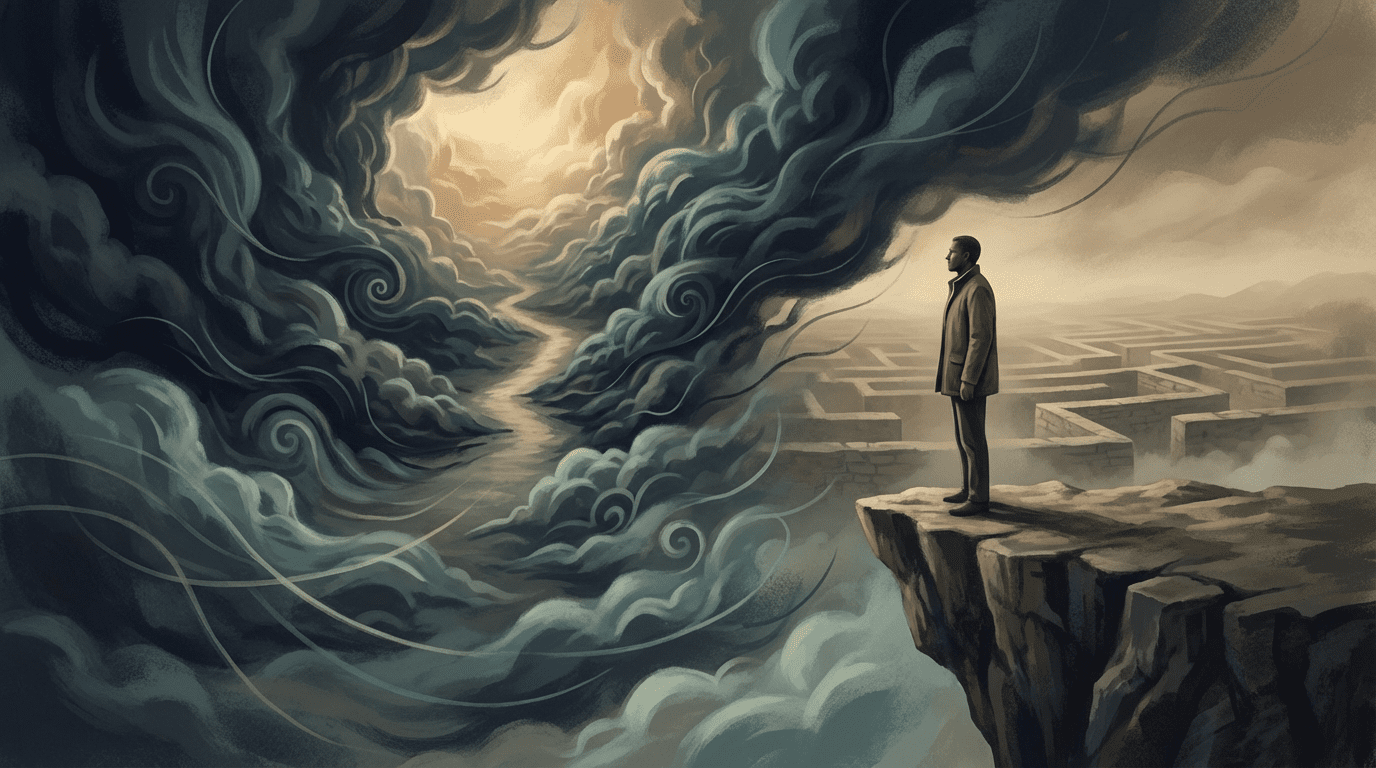
You may feel really stuck or hopeless at the moment, trying to navigate your ways through the maze of anxiety.
And I know that sucks. And I know it’s scary. But it’s also part of the journey. Having anxiety can be very confusing and (as I’m sure you know) trying to find the solution is too.
We navigate these stormy seas in search of paradise, with the uncertainty of ever finding it. It’s tough.
But there’s a good element to all of that. Why?
Because that feeling of frustration, being lost, stuck, hopeless – can push us to take action.
Sometimes the pain has to get to a certain level, at which you draw a line in the sand saying “No More!”.
Maybe the anxiety had gotten worse. Maybe your life shrunk and you’re stuck at home most days. Maybe you lost your job or your partner has left you because of this.
We can use that pain as a catalyst for action. To push us into deciding to do everything we can to recover from anxiety.
This was true to me too. For years I was stuck, feeling very uncertain about ever getting over this. And, maybe like yourself, I was trying things but never got much further. I had almost created a life in which the anxiety was manageable. I just stopped doing a lot of things and hoped for the best.
Until eventually my relationship broke off and the pain got to a new level. At that point, recovery stopped being a should or a nice-to-have. It became a must. And that’s when I went all in and found that guy who overcame panic that I talked about earlier.
So; it’s OK to feel stuck at the moment. We all are on the journey. It all depends on what you do with that feeling.
You can let it demotivate you, or use it to take action.
Truth #3: You may actually not want to recover
You must think I’m full of it – but a lot of times people don’t actually want to recover. Sure, they “want to”, but there’s something else that they want more. Certainty, or safety, or comfort.
The strangest thing that I experienced myself is that sometimes we rather deal with the devil we know, than the devil we don’t know.
Being really afraid of anxiety showing up, we have more certainty staying at home and avoiding it than going outside, for example. We just stop driving, or flying, or working in the office. At least we’re safe, right?
One of the most interesting things I learned was something called “Recovery Resistance”. I won’t go into detail now, but it basically means that we have certain values or characteristics that anxiety meets or shows.
Maybe being anxious means we care? Maybe anxiety gives us the feeling of significance (talking about it all the time with others), or safety (“the world’s a scary place – of course I’m anxious!”).
Back then, I started to know about some of the things I now teach, and it all made sense to me. A LOT more sense than doing breathing exercises or hypnotherapy, but I didn’t try it.
Why…?
Because I was afraid of the uncertainty that anxiety recovery brings with it. I was afraid it wouldn’t work for me.
And as long as I knew about it, and did not take action, it was still within the realm of possibility.
I was like “I can always do that if it gets too bad”.
I didn’t want to do the work. I didn’t want the chance of failure and hopelessness. I’d rather stay in the struggle and pain than to deal with the possibility of being “worse off”.
Sometimes people say “I don’t have time for it”. But then they do have time for daily meditation sessions or Googling symptoms all the time.
But that’s safe. That’s what we know. That’s when we don’t have to look inwards and work on ourselves. And the recovery journey is something we don’t know and it can bring out our biggest insecurities.
Truth #4: There is no healing without going through anxiety
What we all want is to heal using something external. But that doesn’t exist. There is no magical pill that’ll just cure you without ever having to feel anxiety.
Anxiety – or fear – is a human emotion. We cannot get rid of it. We need it to survive. If someone attacks you, you’d like to have the adrenaline to move.
And if you understand how anxiety recovery works, you know that we need to show our nervous system that we’re safe and no one is attacking us.
We can only show our nervous system this in the moments that anxiety shows up.
It’s like having an alarm system in your house that keeps going off every time your cat walks by. You can try to calibrate it when your cat isn’t around, but it’s still going to fire off.
You need to recalibrate the system every time the cat walks by, step-by-step. Every time anxiety shows up is an opportunity to heal.
Said differently: anxiety only learns when it’s activated.
Really, the only thing you have to do is learn and understand what anxiety really is, and how to respond to it whenever it shows up. And then go do that.
Most people think that after they recover, they’ll go out again and do the things they’re avoiding now. And that’s a fallacy, because getting your life back happens before you recover. It’s part of showing your nervous system that you’re safe.
It’s just the cat walking by.
Truth #5: You are subconsciously feeding anxiety
This one feeds into the previous one a bit, and may be the most important one.
We feed anxiety ourselves, by our behavior. In short: by treating anxiety as something dangerous, important, or scary – we tell our nervous system we are in danger.
And the nervous system will help you by releasing more nervous energy. And that energy gives you anxiety symptoms again.
Anxiety is a pattern of behavior. It’s not a disorder. It’s a cycle of behavior we keep ourselves stuck in, because it feels natural.
We’re not “responsible” for why we got into the cycle – that may be due to various reasons like life stressors or undealt-with traumas – but we are responsible for staying in the cycle. Initially that’s subconscious, and we want to make this pattern a conscious thing.
A pattern that you start to recognize, so you can change it and break free from it.
I’m not going to dive into that pattern right now for time sake, but if you like to learn what that cycle is, check out a masterclass that I’ve created that you can watch for free on YouTube.
Truth #6: Recovery takes time and practice
The thing most people hate to hear is that recovery takes time and practice. We didn’t suddenly get into this cycle from one day to another. That took time too.
Forming the unproductive thinking habits took some time and so does mastering responding properly to anxiety.
The good news is that the time it takes to recover does not 1:1 correlate with the amount of time spent in the anxiety cycle.
Meaning, I’ve helped people fully recover that experienced anxiety for over 25 years. And it obviously didn’t take me 25 years.
Things can start to shift quite quickly. For me, and some other graduates in my program, the first thing to go were panic attacks. Because panic is massively fueled by ourselves. I started recognizing the pattern I was in and just doing that stopped the anxiety from growing into a panic attack.
In a couple of weeks I stopped having panic attacks. But to fully recover, and override those anxious pathways in our brain, we need to allow time to pass.
The less you care about how long the journey is, the quicker you recover.
Think of it this way: even if it takes a year to fully recover. How many years do you have left in your life? Think of all those years anxiety free, being able to live the life you want.
How’s that for a Return on Investment?
—
I hope these 6 truths about anxiety have been helpful to you, even though some of them are uncomfortable to hear.
People mean well, but they don’t always have the best advice if they haven’t practiced what they preached.
If you feel stuck right now, know that that’s normal. Use those feelings to draw a line in the sand and take action towards recovery.
Recognize if you have some resistance towards recovery. Does staying the same feel safer or more certain than doing what it takes to recover?
Healing comes from feeling. We’ve got to go through anxiety in order for our nervous system to learn that we can handle it – that we’re safe.
The more we keep avoiding or controlling it, the more we are communicating that we’re in danger and the more anxiety we get.
Check out my free masterclass to learn about the pattern of behavior that you’re in, subconsciously feeding the anxiety, and allow yourself time to heal.
It can happen way quicker than you expect.