Performance anxiety is incredibly common. And it shows up in more places than most people realize.
For some people it’s sport. Standing on the tee box, lining up a penalty, getting ready to compete and suddenly the thing you’ve done a thousand times feels impossible to do.
For others it’s work. The presentation you’ve prepared for, the meeting where you need to think clearly, the moment someone asks you something and your mind just goes blank.
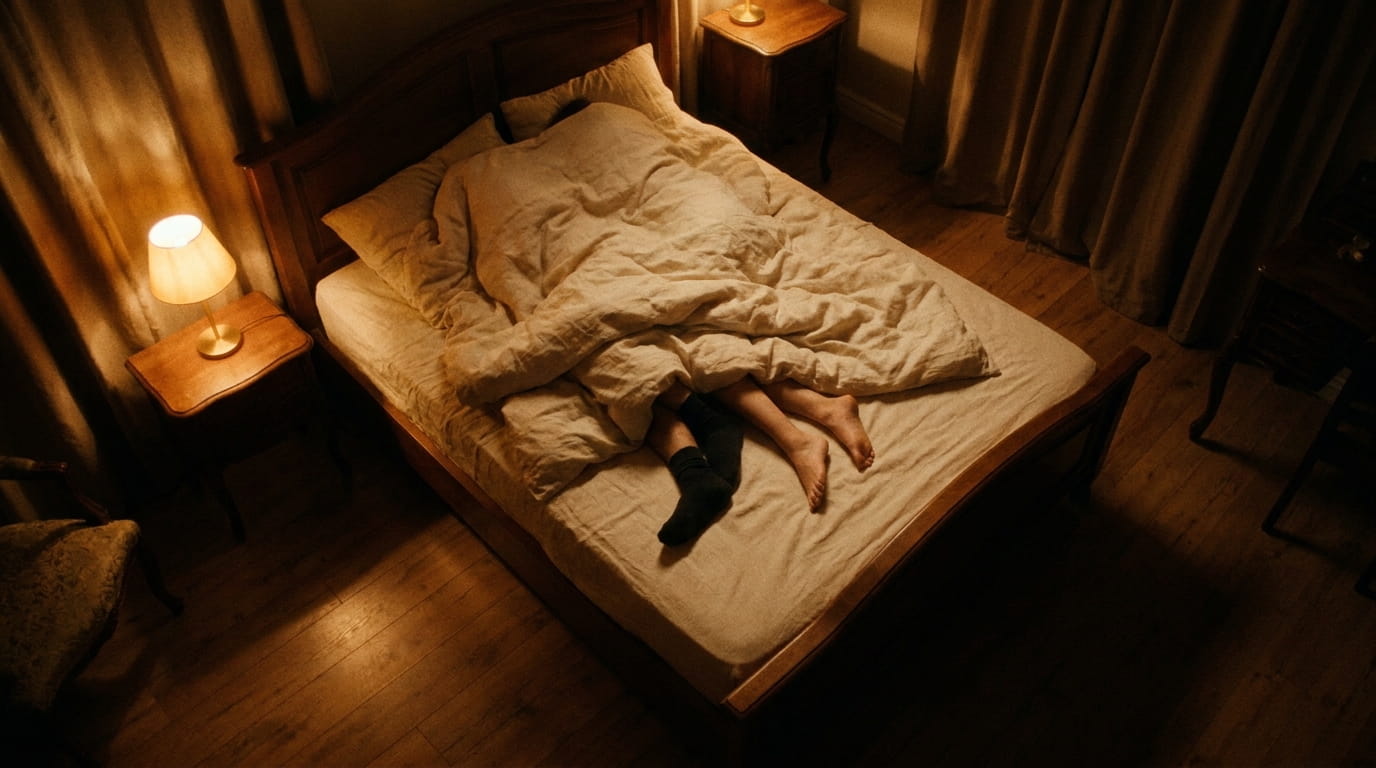
And for a lot of people (more than ever talk about it) it’s sex. The moment anxiety shows up in the bedroom and the body just doesn’t cooperate, despite wanting to. Despite being attracted to your partner. Despite everything being completely fine five minutes ago.
Three very different situations. But underneath all of them, it’s the same thing happening.
It’s the same loop
Remember the anxiety loop? The pattern that we do, that creates or maintains anxiety.
This pattern is very much underneath performance anxiety too.
It often starts with a what-if question.
What if I fail?
What if I blank?
What if it doesn’t work?
And because we really don’t want that to happen, we start monitoring. We start scanning ourselves, focusing inwards, in an effort to make sure we perform.
But that focus tells your nervous system that this is a threat. And your nervous system responds by going into the sympathetic state (a.k.a Fight or Flight).
And here’s the problem. That state does the exact opposite of what you need.
When your sympathetic nervous system is activated, it becomes harder to think clearly, move fluidly, speak without stumbling, and (yes…) to function sexually.
Your body is preparing to fight or run. Not to give a presentation or have sex.
So when you experience the very thing you were afraid of, it increases the fear even more.
Which keeps the loop going!
The goal behind all of it is certainty. It’s control. We want to guarantee the outcome won’t go wrong. But that’s exactly what’s keeping us stuck.
Simply said: caring about the outcome is what prevents the outcome.
The more you want to do a great speech at work, the less you will. The more you want to have sex, the less you will. The more you want to nail the serve, the more likely you are to miss it.
And this doesn’t just happen in the moment. It starts way before that. The story builds. We check in with ourselves. We monitor, we avoid, and the loop tightens.
The good news is that it’s something you do which means it’s something you can change.
Why it feels different from other anxiety
Everyone thinks their anxiety is unique. And with performance anxiety, there is something that makes it feel even more personal: the social layer.
Often there’s an audience, whether that’s real or imagined.
People watching your game.
Colleagues (or your boss…) in the room.
Your partner in bed.
And that adds shame on top of the loop, which makes the stakes feel even higher.
That shame is also why so many people suffer with this for years in silence. Especially when it comes to sexual performance. It’s one of the most common forms of anxiety there is, and almost nobody talks about it honestly.
If that’s you, know that you are not alone. And nothing is broken.
It’s just anxiety. Your body responding to the pattern you’re running.
Why forcing it doesn’t work
The instinct when performance anxiety shows up is to try harder. More preparation. More willpower. Push through it.
And for most things in life, that works. But there’s a category of things your body does automatically, things controlled by your nervous system, that actually reverse under pressure.
Sleep is the clearest example. The more you want to sleep, the less you will. You can’t willpower your way to sleep. Your nervous system needs to be in the right state for it to happen. You need to be in what’s called the parasympathetic state (a.k.a Rest and Digest) for sleep to happen naturally.
The same is true for sex. If you’re in Fight or Flight, your body doesn’t prioritize sexual function. It prioritizes survival. That’s always going to come first. So it’s not that something is broken or that you’re not attracted to your partner. It’s simply that the state you’re in doesn’t support the outcome you’re after.
Wrong operating system.
The more you force it, the less you get it.
Athletic performance works the same way. When you start spectating yourself, which means watching yourself perform instead of just performing, you get in the way of something that was working perfectly on autopilot. The skill didn’t disappear. Access to the skill disappeared.
At work it’s the same. The moment you’re more focused on how you’re coming across than on what you’re actually saying, you make it harder to think clearly. Which reconfirms that vicious cycle.
What actually needs to change
The shift isn’t about pushing harder. It’s about changing your response to the anxiety itself.
Most approaches to performance anxiety try to reduce it, suppress it, or muscle through it. But all of those responses (however well meant) confirm to your nervous system that the anxiety is a threat worth reacting to. Which keeps it going.
I always like to say it’s like scooping water out of a sinking boat. Temporary relief, but the hole never gets patched.
What actually works is the opposite. Learning to allow the anxiety to be present without treating it as a catastrophe. Stopping the self-monitoring. Redirecting your focus outward, toward what you’re actually doing and the person in front of you, instead of inward toward your own performance.
That’s not a trick or something you just do once. It’s an active, learnable skill. And like any skill, it gets easier and more automatic with practice.
Noel, one of our program graduates, had his first panic attack during a live on-camera presentation. It kept recurring every time he had to present, completely taking over his attention. He tried therapy and medication. Neither resolved it. After learning a different way to respond to anxiety, he now delivers full-day corporate trainings, travels for work, and goes skiing with his kids on weekends. His words: “I’m version 2.0.”
This is totally overcomable
Performance anxiety is not a permanent part of who you are. It’s a pattern, a loop your nervous system has learned to run in certain situations. And loops can be broken, as you probably know if you’ve read more posts here 😉
The same approach that works for panic attacks, health anxiety, and general anxiety works here too. Because underneath all of it, the mechanism is the same.
A nervous system that’s learned to treat certain situations as threatening, and a set of responses that keep confirming that threat is real.
When you learn to respond differently and practice that until it becomes the default, the nervous system gets a different message. And over time, it lets go.
If you want to understand how that works in more detail, the free masterclass is a good place to start. Or if you’re ready to talk about where you’re at, you can book a free discovery call with the team.
You’re not alone in this. And this doesn’t have to stay the way it is!
Thank you for reading.