
I once had a panic attack in a cinema. Not because of the movie, but because I was terrified of blocking someone’s view if I had to leave.
Yeah. That happened.
If blushing, stuttering, sweating, or just dreading social situations sounds familiar – this post is for you.
Here’s the thing: you’ve probably been told to just push through it. Think positive. Fake it till you make it. And if that actually worked, you wouldn’t be reading this.
So today I’m going to share why this fear is so deeply wired into us and the exact techniques I used (and still teach) to actually break it down.
And if you stick with me till the end, I’ll share some of my most awkward social moments so you know you’re not alone in this. (And OK – you can have a laugh too…)
Why do we worry about social settings?
Humans are social creatures. Not just because we like it – but because at some point in the history of our species, interacting with other humans was necessary for survival.
In the old days, when tigers would be lurking in the bushes, being part of a group meant you would have a higher chance of survival.
You’d move around in groups. Many eyes on the surroundings.
When you’d be asleep, someone would be on watch and vice versa.
The men would hunt game and the women would gather berries and take care of the offspring. It all made sense – and this is how we survived and evolved.
But, what if you would lose your tribe? What if you would do something that led you to be on your own instead of the group? That would likely have meant death.
This is why the brain has learned, over time, that being liked by other people is important. We have this urge, this need, to be part of a group. Whether that’s your family, friend group or work colleagues – we want to be a part of that.
So, naturally, we have this tendency to think about what others may think of us. We have this tendency to want to be liked, or to be deemed important. And this could lead to unproductive behavior, like overthinking, people pleasing or saying yes to a lot of things you don’t want to actually do.
That ancient survival wiring is still running. It’s just pointed at a coffee meeting instead of a tiger.
Social Anxiety
Now, suddenly, you start to experience panic attacks or another form of anxiety, and we no longer trust our own bodies.
At any time, right in the middle of a conversation, we may feel like we’re losing all sense of control. We may feel like we’re dying and need to run.
“But… what will they think of me?”
“Will they still like me?”
“Will they see I’m awkward and weak?”
We start obsessing over these catastrophes, visualizing ourselves becoming an outcast from the group. Maybe the whole group is able to go out while you’re making up excuses why you can’t go.
And after a while, they stop asking you to join altogether.
I speak to people with anxiety every single day, and this is really common. I hear things like these a lot, and it’s a real tough place to be at.
Most people push through and show up, but spend the whole time inside their head, hyper-focused on how they’re coming across.
Which then just increases the sensations you were trying to suppress, like blushing, stuttering or sweating.
It can lead to becoming absolutely housebound – or avoiding any time of speaking – which unfortunately just increases the anxiety around it.
My story
A large part of my experience with anxiety was also socially related.
For some reason, I worried a lot about what random strangers would think of me. I was scared to death of vomiting or fainting in public.
I would picture these people seeing me vomit or faint, and thinking something bad of me.
Or – even worse – they would actually try and help me! They’d see how weak I was!
I even panicked in the cinemas for not being able to get up and leave if I wanted to, because I would be blocking the screen for someone behind me.
The audacity!
I was genuinely furious at myself for even being there.
Now, how do you think that believing these stories and trying to suppress feelings like vomiting or fainting worked out for me?
It increased them. The stories got reconfirmed and validated.
In social settings, I would start panicking. I would get nauseous to the point of almost vomiting – and I would start shaking as if I’m about to faint.
Let me share with you a couple of techniques that helped me overcome this.
These techniques are part of the overall skill that leads to anxiety recovery, which is responding properly – and it’s something many people who are only focusing on acceptance forget.
Before we dive into them, let me quickly explain something about stories.
Stories
Anxiety always comes with a story. A doomsday catastrophe that we believe in might happen.
Us subscribing to those stories keeps the anxiety alive.
These stories are the fuel that keeps the nervous system on high alert, giving us more anxiety symptoms, which then just confirm that story.
Here’s a couple of examples:
- “If I get a panic attack everyone will notice it”
- “If I start blushing people will think I’m weak”
- “What if I get anxiety during this business meeting and I lose my job?”
- “I’ll lose all my friends because of anxiety”
Now, in order to overcome this fear you’d need to first understand the mechanics of anxiety, so you’ll understand you’re actually safe when it shows up – and you don’t actually have to leave.
On top of that, we need to crush and disarm these stories while we allow the unpleasant sensations and symptoms to show up if it wants to.
By the way, if you want to deep dive into what the anxiety recovery journey looks like, I created a video together with our Head Mentor, Mirka, in which we answer common questions people have about recovery. Check out that video here.
4 techniques to crush these stories
- Identify thinking errors
One of the most powerful things I always talk about are cognitive distortions – or thinking errors.
All humans have a negativity bias. And when we’re sensitized, our anxious brain becomes even more focused around the negative. So, a lot of “thinking errors” will show up.
It really helps to know about these so you can catch yourself engaging in them, and correct yourself. That way you break down that story really quick!
Let me cover the most common thinking errors that people with anxiety have using the example:
“They’ll see how awkward or weak I am once I blush, sweat, stutter…”
– Emotional reasoning: you reason from how you feel.
So, in this example, you FEEL awkward and weak. It doesn’t mean you ARE awkward or weak. Or, when anxiety shows up, you feel like you’re in danger – but you’re actually safe.
– Mind Reading / Jumping to Conclusions: we guess what other people may be thinking (about us).
May not even notice you blushing. They may be thinking about themselves (like everyone does). Or, they may see it but not think anything negative about it. How do you know they would? You’re mind reading.
– Discounting The Positives / Mental Filtering: We only notice the negative things or we discount the positive things as if they’re less valuable than the negative.
Even though you broke through your fear and spoke. May actually have brought value to the conversation. You discount or forget about ALL OF THAT, because you blushed?
– Fortune Telling: we imagine the future all negative. It’s like you’re looking through a crystal ball that’s only showing you the bad outcomes.
Try this for yourself using the stories you’re running. What negative thoughts do you have around social things? And how many of these four thinking errors can you identify?
- “So What!”
You may have heard this before, but telling your brain “So What!” can be incredibly helpful in crushing the stories.
Because the more you know about anxiety, the easier it gets to say “So what” in a way that makes sense for you.
For example, now you know that anxiety always comes with a story, you can literally remind yourself “So what, this is just a story! It won’t happen.”
And even – “If it happens, whatever! I’ll be OK”.
This way you stop fueling the anxiety as you’re no longer engaging with the stories.
Here’s a couple of examples:
- So what, it’s only adrenaline showing up. It’ll pass.
- So what; they probably won’t even notice me panicking as I’m great at hiding it
- Whatever, if they hate me for blushing I don’t want to be friends with them anyways
- So what; the only way to get better is to go through this.
- Whatever. I can handle way more than I think.
Instead of So What or Whatever, some people like to use a more direct way of speaking, like saying “F@*# It!”.
- The Double Standards Technique
Another technique that really helped me is the double standards technique.
Picture your best friend, or your sibling, or someone exactly like you in this situation.
That person is telling you all the things that you’re currently telling yourself. How would you respond to that? What would you say?
For example, you’d hear “If they see me stutter they’ll think I’m dumb!”.
Would you say: “Oh yeah, you’re right. Everyone thinks that. You should just shut up”?
Or, would you say “No one will think that way. Instead, they’ll think you’re brave to speak.”?
It probably be the latter. Which is what 90% of the people would think.
The compassion you have for others is something they often have for you too. You are the ONLY ONE who’s actually that strict towards yourself.
And the other 10%? I’d say “F ‘em!”.
- The Paradoxical Intention
Lastly, a great technique is to turn around the intention. So instead of trying NOT to blush or sweat, try to actually do it.
You’ll see that the more you want to, the less you will.
If you’re up for it and you’re on that stage or board meeting, decide you’re going to show them exactly how much you can sweat.
Tell them to bring the freaking Guinness Book of World Records cause you’re about to show them!
You likely won’t be able to.
Conclusion
Besides allowing anxiety to show up whenever it wants to, it’s important to work on the stories you’re keeping.
There always is a story.
Catch yourself engaging in thinking errors, like all humans do, and correct yourself. What is the truth?
Answer that “What-if” question by saying “So What” or “Whatever”, followed by what you know is the truth.
Practice the Double Standards Technique and Paradoxical Intention if you’re up for it.
And slowly by slowly, you’re crumbling down this old story and you get the proof you’re able to handle this.
You’ll be able to handle social settings even with anxiety being present.
You’ll be able to speak and provide value even if you forget your train of thought, or you blush or sweat.
You’ll still be alive, and you can try again.
The more you do, the easier it gets
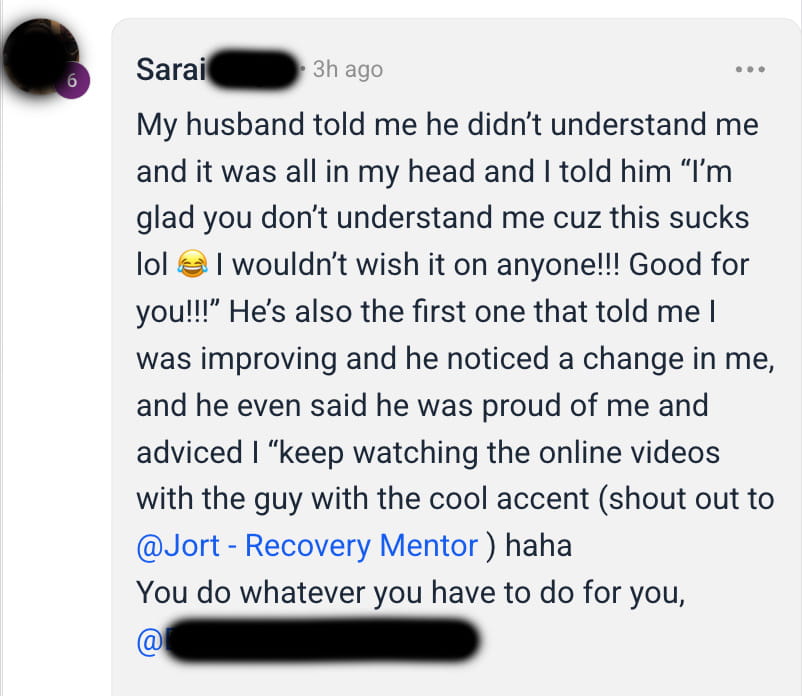
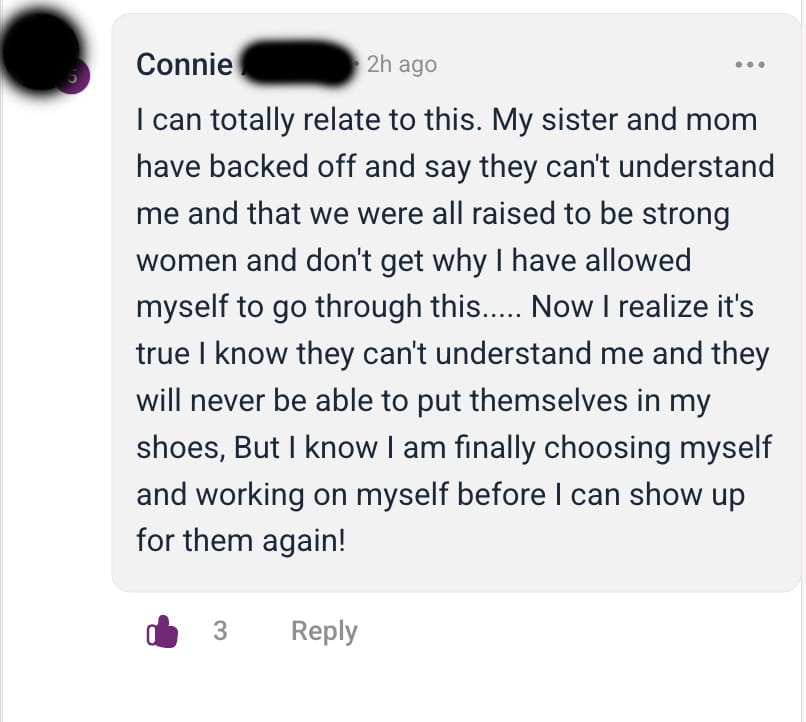
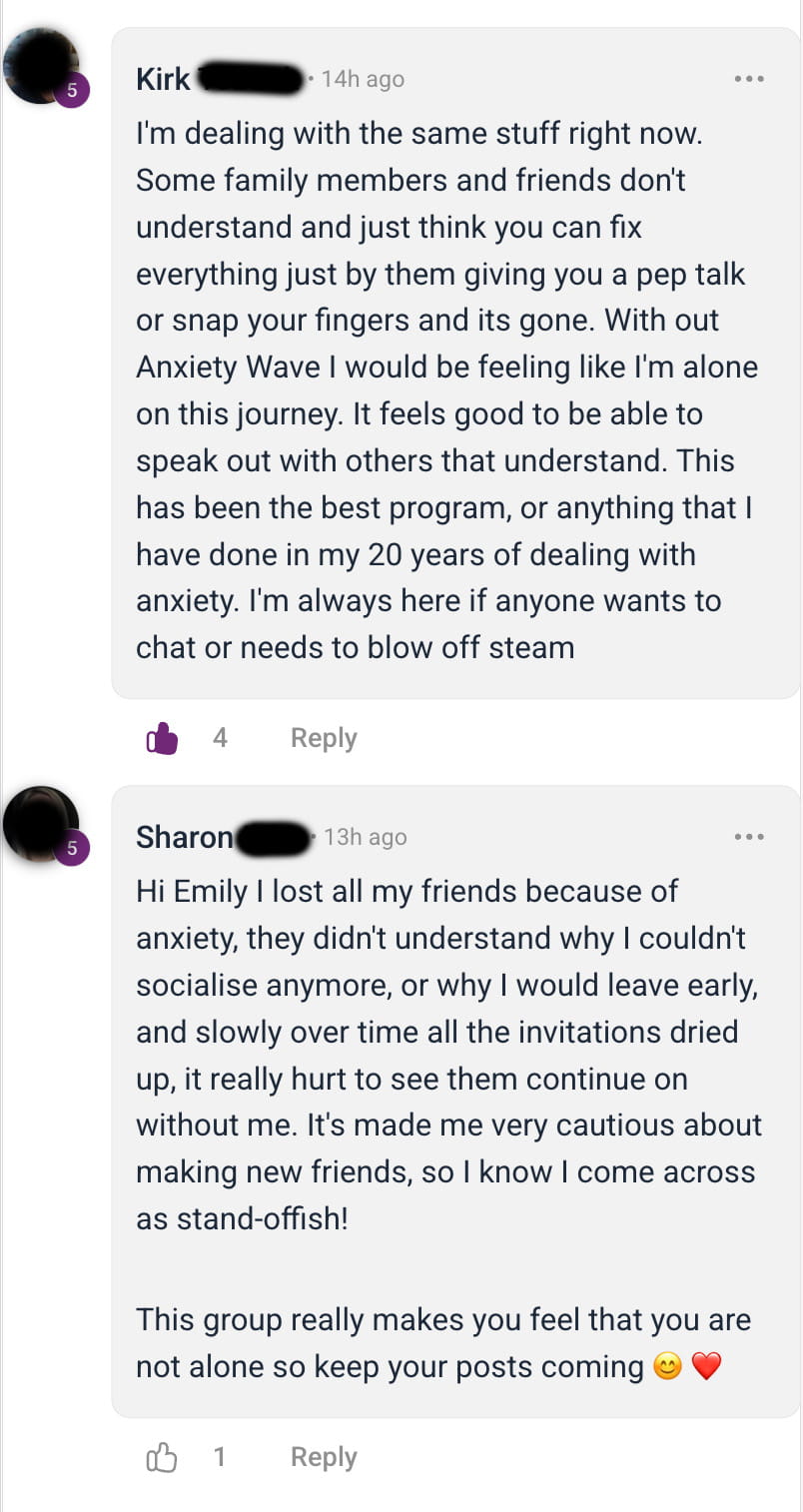
Lastly, it can be extremely helpful to be part of a “tribe” that understands anxiety. Because I know it’s tough being surrounded by people who just don’t understand.
Friends, family, how can they understand if they haven’t lived it?
They may try to really be supportive by telling you to just push through, or think positively, but they don’t understand it’s not that simple.
It’s not a matter of willingness – it’s a matter of not knowing how.
For that reason, I’ve created a Mentorship Program that comes with a community, filled with people who suffer from anxiety and are recovering, and people who already have.
And I’ve created a free community that you can join right now.
So you never feel like you’re the crazy one. Or you’re alone in this.
Here are a couple of messages that show you the importance of having this support group:
If you like to join that free community, click here.
And if you like to talk about joining our Mentorship Program in a free discovery call, book yours here.
I hope this has been helpful.
The key is in implementing these techniques, not just knowing about them.
So go on and practice and reach out for support.
You got this!
Oh, I almost forgot.
I promised you a few of my embarrassing moments, didn’t I?
These are things I’ve learned to laugh about, because we can’t go back and undo them anyway. Holding on to embarrassment is just a recipe for more suffering.
- I once tried to help a supermarket employee because I thought I saw boxes tipping over. By trying to help, I actually knocked them over myself and he was convinced I did it on purpose.
- My drum teacher told me to “go get a coffee.” I thought he was offering me one, so I said I didn’t want any. He started laughing: “You’re not getting a coffee. It’s for me.” The jerk.
- I ate something bad on a hot day and was speeding home. At the stoplight right before my house, I started vomiting in the car. I looked to my left… and a van full of construction workers were staring at me in shock.
- During a presentation I completely blanked, forgot everything I was going to say, and turned red for what felt like an eternity.
And as you see I’m still alive. The world didn’t end.
We’re all human. And that’s actually the whole point.
-Jort