I remember being at one of my lowest points during the 6 years I struggled with anxiety, wondering if things would ever change.
Everything I had tried didn’t seem to do anything and instead I’d just get deeper and deeper into it.
Why would anything change?
What if in 5 years I’m still like this? Or in 10?
That thought really scared me.
If only I knew how to recover, if it was even possible.
If only I had the right tool to get me out of this.
Then, a couple of years later – I was still stuck – but I started to learn about this idea of accepting the anxiety and responding to it in a different way.
It made so much sense I remember feeling a sense of hope that I hadn’t felt in years. But at the same time, that hope really scared me.
Hope had become this warning sign that told my system: you’re going to get disappointed.
Hope had actually become something that would just get me deeper into it as none of the things I had tried worked out.
Instead, it only decreased my confidence. So I was cautious and didn’t take action.
I felt like I needed to wait for the right time.
I decided to wait for anxiety to die down a little so I could give this a try.
That obviously never happened.
One of the first books that made a big impact on me during my recovery journey was the book “Man’s Search for Meaning” by Viktor Frankl. In that book he tells his story of being locked up in concentration camps during WW2.
He describes these terrible situations he was in, totally unimaginable for someone like me in the world I live in.
One of the things he found out during that time was that the soldiers could take everything from him, but never his internal world. Never the meaning he gave to things. That would always be his.
He said: you decide which meaning you give to something. And that meaning determines how you feel about it and what you do.
That sparked something in me.
A tiny, shy voice in my head said, “what if anxiety is actually asking you to grow?”.
“What if you just need to step up and do something?”
That thought blew my mind because, before, I thought I was at the mercy of life itself. I thought there was something wrong with me.
Somehow it didn’t occur to me that maybe I needed to learn something.
Maybe the problem was me, myself.
So I decided to go back to what I read about “acceptance”, and find someone to teach me this.
I decided to start my recovery journey – at last.
The biggest lesson I learned from this is that:
Recovery takes courage.
It takes courage – not just to ask for help or to invest in yourself, but also to allow anxiety to be.
It takes courage to allow heart palpitations, nausea or scary intrusive thoughts to simply exist without running away from them.
Responding properly takes courage.
It’s a step into the unknown, with chances of disappointment or “failure” (I like to say “learning”) – and it’s not always easy. It takes guts.
BUT,
This is the good news I found out about:
Having courage gets easier when you have the right tools.
Because when I went for it? When I dared to believe recovery was possible for me?
I had the right method.
I learned about the Five Steps. I started to understand the cycles I was in.
I knew how to respond to anxiety. And that made it so much easier to be courageous in facing it and healing.
I also didn’t have to do it alone, as I had a mentor.
Which is actually one of the reasons why I’ve now created a whole community around recovery so people will never feel like doing it alone – which makes all the difference.
The difference between daring to recover with or without the right tools:
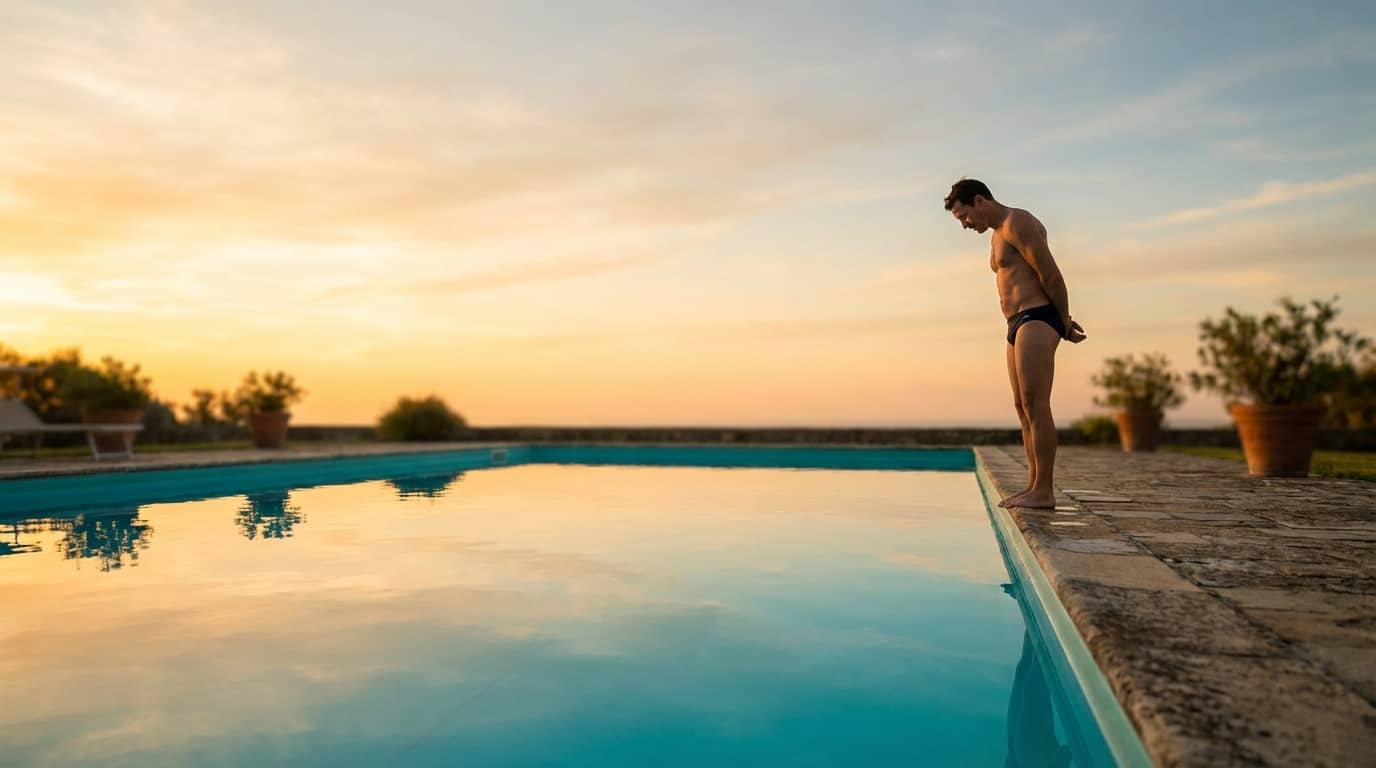
Without knowledge, the right tools and support, daring to recover can feel like jumping into a pool without knowing if the pool has water in it or not.
But when you have the right tools, daring to recover feels more like jumping in the pool with the knowledge that the pool is filled with water.
You’re still nervous, but you do it anyways, trusting it’s going to get you healed.
We see it happen over and over in our community; people who’ve waited for the “right time” or for things to work themselves out.
Then, they start to use the tools with a little bit of courage, and within weeks they see a massive change. They are getting their lives back, and question:
“Why didn’t I do this sooner?”
The anxiety may still be there, but the trust and courage has increased with the knowledge on what it is and how to deal with it.
And then recovery becomes so much easier.
The take-aways from this:
You may not feel courageous at the moment. And that’s totally OK.
It gets so much easier with the right tools and knowledge.
Plus, you only need the courage to get started. Because once you get started, things are going to make sense and you get more courage.
You don’t need courage to face anxiety now. Just the courage to learn about it first.
Because then you’ll start stacking your own internal proof, and courage turns into confidence.
You don’t need to feel confident or fully believe before starting and investing in yourself.
You just need to start.
What really helps is surrounding yourself with people who have actually recovered. Normal people, like you and I.
To do that, you can check out my YouTube collection of interviews I did with people who recovered from anxiety. Those videos will give you a lot of tips and help you get that courage yourself.
Your whole life can change when you make the decision to do the scary thing and invest into yourself.
And when you know the pool has water in it,
It gets so much easier to make that jump.