Today, I’d like to talk a little about something most people with anxiety know about: “Exposure Therapy”.
I’m going to explain what it is traditionally, what I mean when I say exposure, and whether or not it could help you overcome your anxiety.
I’m writing this from a place so different from when I first dealt with exposure, as I now no longer have any anxiety symptoms. But back then, I was convinced that exposure doesn’t work.
I tried it. It didn’t work.
Until… Fast forward a couple years, I learned how responding differently to anxiety, through acceptance, could help me escape the loop.
I started to practice this response and experienced the difference during anxiety. It felt so freeing.
Right before learning that response, things had gotten really bad for me and I went out and applied for therapy once again. I think it was around the fifth or sixth therapist.
And this therapist was amazing! Why? I came in – having just experienced this “new response” – and I arrogantly said “I’m going to recover with or without your help. But I want your help to hold me accountable”.
And she started to quiz me about what I knew about anxiety. And I passed the tests.
Then, we started talking about exposure. She asked me if I liked to do some exposure exercises – where she could hold me accountable to do them.
I said: “I tried it. It didn’t work”.
I explained how I had still been going out. I was going to the movies occasionally or to restaurants – just having a terrible time – so I was “exposing” myself, right?
Turns out that wasn’t exposure, really.
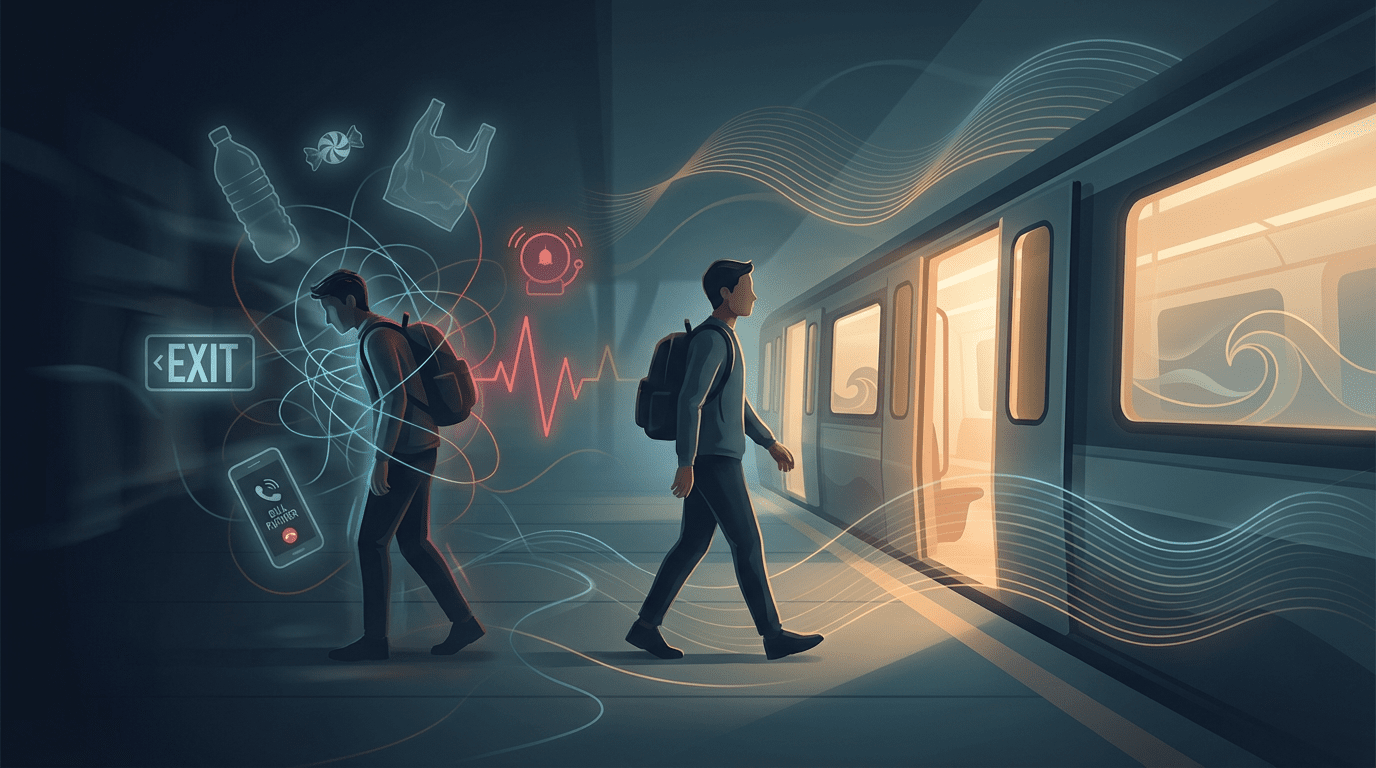
Why? I was just forcing myself to go out and try NOT to have anxiety. I was trying to have a good time, and doing all kinds of things to avoid anxiety.
I was sitting close to exits or toilets. I was drinking alcohol to calm myself down. I would bring a plastic bag or peppermints in case anxiety showed up.
And every time anxiety did show up. And every time I felt worse off because I felt like a failure. I tried so hard to not have anxiety, and every time I did.
And in social settings, other people were having a great time. My friends for example, they were free to do whatever they wanted. But I was dying inside and constantly comparing myself. It was terrible.
How in the world is that going to heal anxiety?
Here’s what I learned:
Traditional exposure works counterproductive for recovery.
The kind of exposure that most people with anxiety try is the one where you force yourself to go out to a certain place or situation. You’re white knuckling through.
It’s the mindset of “the more I go to the grocery store, the less anxiety I should get eventually”. Which makes sense – and could actually be true.
But the thing is, we’re not afraid of the grocery store. We’re afraid of the anxiety itself showing up at the grocery store (or cinema, or at home, or in an office meeting, etc…).
So, even if we expose ourselves to the grocery store and it becomes easier for us to go there, we still have anxiety at the cinema, or at the office.
Plus, with this kind of exposure we hope anxiety doesn’t show up. We hope we don’t get a panic attack, but often do. And when anxiety shows up, we have no idea how to deal with it so either we force ourselves to stay and have a terrible time. Or we escape and feel like a failure.
This type of exposure actually decreases your confidence and your tolerance to anxiety.
Why would you be bothered if the only thing that happens is that you get anxiety and feel worse off than you did staying at home?
So to conclude: forcing yourself to live a normal life without knowing how to deal with anxiety won’t get you recovered.
This type of exposure works for phobias, like a fear of spiders. But not for anxiety recovery.
You’re missing an important ingredient.
Exposure as a way to practice your response to anxiety is the key.
Rewind to me sitting at the therapist office saying that exposure doesn’t work.
She told me that now I was learning what anxiety was – and how to respond – it could actually be really helpful to do an exposure exercise.
The biggest difference, though? I was going out with the intention to experience anxiety, so I could practice my response.
By the way, if you don’t know what I mean when I talk about my “response to anxiety”, check out this 2 minute YouTube video explaining how responding properly gets you out of the cycle of anxiety permanently.
So, instead of going out hoping I didn’t get a panic attack – I was going to do something I had been avoiding for a long time with the expectation of panic showing up, knowing I had the understanding of what it is and the strategy on how to respond to it.
That therapist asked me what I wanted to do and I said “take the train to another city”.
When she asked me to do that as “homework” for that week, I was like “nope – not going to happen”. Because obviously it scared the hell out of me.
But, anxiety only learns when it’s activated. So I felt like I needed to do that. We made a plan and I decided to not take any coping crutches with me and go and do it.
I wanted to prove to myself that my response to anxiety was within my control, and I could handle the panic.
The funny thing is that with that attitude, I didn’t have much anticipatory anxiety. I actually slept pretty good the night before and only right before going to the train station I got a bit of anxiety.
In the train I felt panic come up but it never got to a panic attack… wow!
I just kept focusing on my response.
For the first time in years, and I remember this vividly, I felt freedom.
Why? I was showing myself two things:
- I know how to handle anxiety, so whenever it shows up it’s not as bad as before.
- I was getting my life and confidence back.
And my nervous system was learning. It saw me behave as if I was safe, and it started to let go. It didn’t need to help me by boosting stress hormones all the time. It could regulate itself again.
I started to break free from the cycle of anxiety, creating my own personal proof that I could deal with it.
I had no other behavior or condition to attribute my progress to. Because I didn’t bring any coping crutches and I practised some of these things in certain settings, like it being crowded on the train – or I wouldn’t sit near the end of the row in the cinema but in the middle instead.
I did that a couple of times and then decided to simply focus on living again.
I decided not to avoid things I wanted to do anymore, even if they scared me, and whenever anxiety showed up – I would simply practice my response.
This is how exposure can work.
The key elements I want you to take away:
Recovery happens when you learn how to respond to anxiety and when you decide to do that consistently.
When you start living your life the way you would if you didn’t have anxiety holding you back, you’re going to get your life back.
But it all starts with educating yourself around what anxiety is and how to respond to it. Just forcing yourself through it will only make it tougher on yourself.
This is something we help people with in my Mentorship Program. If you like to learn more, you can book a free discovery call with someone from my team here.
I hope this made sense to you and you see that just exposing yourself to certain situations without having the right strategy to deal with anxiety isn’t going to work.
If that is you, then you don’t have a motivational problem. Which is great! Because facing anxiety is part of it. In that case, I would say, focus on educating yourself around anxiety.
And take it step by step.
Thanks for reading,
Jort